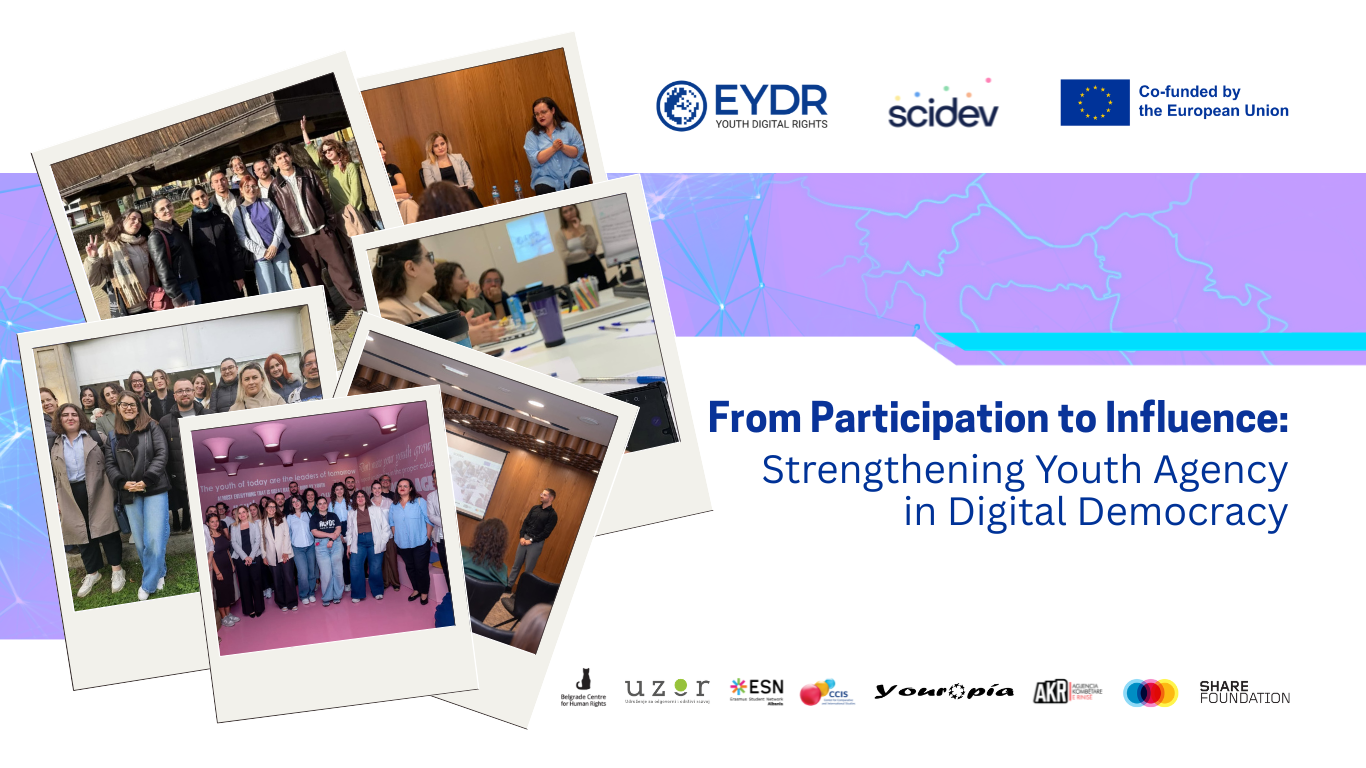
Digital participation is often reduced to access and technical skills. Yet the real democratic question is different: who shapes the rules of digital space and are young people meaningfully part of that conversation?
Over the past two years, the international partnership of organizations from the Western Balkans and EU, coordinated by SCiDEV, led a transnational consortium under the Erasmus+ Youth Capacity Building programme through the project “Youth Participation in Digital Democracy: From digital skills to digital rights of youth with fewer opportunities” (EYDR). Together with partners from Albania, Montenegro, Serbia and Spain, EYDR worked to move youth engagement beyond digital literacy toward structured participation in digital democracy and rights-based governance.
Reframing Youth Participation in the Digital Sphere
EYDR began with a recognition: young people are the most active digital users, yet their participation rarely translates into influence over digital policy, platform governance, cybersecurity debates, or AI regulation. In many Western Balkan contexts, digital transformation has advanced faster than democratic safeguards and inclusive participation mechanisms.
To address this gap, the project combined research, capacity building, cross-border exchange, youth-led production and policy dialogue.
Two national Mapping Reports in Albania and Montenegro provided an evidence-based assessment of how young people participate in digital democracy, where systemic barriers exist, and what policy opportunities remain underused. These reports did not remain just at research level. They shaped the design of the Youth Digital Democracy Accelerator Programme and informed structured discussions with public institutions, civil society and media actors.
Building Capacity That Translates into Agency
At the centre of the project stood the Youth Digital Democracy Accelerator Programme — a structured, mentored pathway designed to help young people translate lived digital realities into democratic participation and policy-relevant advocacy. The programme strengthened three connected capacities: (1) digital rights understanding (privacy, safety, expression, accountability), (2) critical engagement with digital power (platform logics, information ecosystems, risks and harms), and (3) policy-facing communication (how to turn evidence and youth experience into positions that institutions can engage with).
Within this framework, youth workers and young participants engaged in a structured process of learning, mentoring and applied policy work. The programme resulted in youth-led awareness campaigns, including podcasts and op-eds co-produced with young participants, and policy briefs addressing safe digital spaces, online participation, artificial intelligence and tech-facilitated gender-based violence.
Two international mobilities in Belgrade and Oviedo strengthened the European dimension of the project, enabling comparative reflection between Western Balkan accession countries and an EU Member State. This transnational cooperation allowed participants to situate local digital challenges within broader European debates on democracy, rights and governance.
For the young fellows involved, the impact was tangible.
 Ajla Mansi reflects:
“Through EYDR, I worked on writing a policy paper, which gave me a practical look into research, teamwork, and how ideas turn into real policy discussions. It was a really interesting approach that helped me gain a broader view on things.”
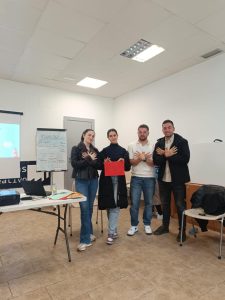
Uestli Guci describes the experience as transformative: “Being part of the EYDR Oviedo mobility was a turning point for me in terms of professional development. Working together as equals from the Balkans on AI in fact-checking not only taught me advanced research techniques, but also introduced me to young changemakers dedicated to digital rights. Collaborating with Ajla Mansi, who was excellent to work with, exemplified the perfect intersection where technical expertise meets policy impact.”
 Xhorxhia Behaj highlights the intersection of technology and rights:
“EYDR helped me better understand the challenges of cybersecurity in Albania and the factors that cause cyberbullying, through the preparation of a presentation. Also, participating in the mobility in Belgrade taught me the importance of digital tools and activism for the benefit of society. Ultimately, I finalized my EYDR journey with the publication of a policy paper on tech-facilitated gender-based violence, connecting technology with human rights.”
These reflections illustrate a key outcome of the project: not only increased knowledge, but strengthened agency and policy confidence among youth participants.
Institutional Strengthening and Policy Dialogue
Beyond individual development, EYDR reinforced cooperation among partner organisations across Albania, Montenegro, Serbia and Spain. Peer-to-peer mentoring, joint methodology development and coordinated implementation created a durable foundation for continued collaboration.
Structured engagement with institutions such as the State Minister for Youth and Children in Albania, the National Youth Agency and the National Authority for Cyber Security contributed to a more informed and youth-inclusive dialogue on digital rights and democratic participation.
Across these strands, EYDR strengthened youth and organisational capacity and helped bring a more evidence-informed, rights-based framing into national conversations on digital democracy — linking youth experience, research findings and policy-facing dialogue in a way that can be carried forward beyond the project cycle.
Continuity Within consortium’s Strategic Work
For the partner organizations in the consortium, EYDR sits in the intersection of our programmes on digitalisation and democracy, where we work on questions of democratic oversight in digital transformation: the protection of digital rights, accountable governance of technology, resilience against digital harms, and inclusive participation in policy processes that increasingly shape public life.
EYDR strengthened this agenda in two practical ways. First, it generated research-based insight and youth-informed perspectives that enrich our ongoing analysis and public work. Second, it broadened and diversified the constituency engaged in digital rights dialogue, bringing youth, particularly those with fewer opportunities, into a space that is often dominated by institutional or technical actors.
In this sense, EYDR represents both a completed action and a reinforced foundation for our continued work at the intersection of youth participation, digital rights and democratic governance.
Conclusion: From Youth Voice to Youth Influence
Digital democracy is not built through visibility alone, but through rights, accountability and inclusion and through the ability of communities to engage institutions with credible arguments, evidence and lived experience.
Over two years, EYDR demonstrated what becomes possible when research, participatory capacity-building and cross-border cooperation are combined into a single approach: youth participation can move from “engagement” to influence, from content creation to policy contribution, and from isolated initiatives to sustained democratic practice.
The project strengthens a guiding principle of our work: digital transformation must be accompanied by democratic safeguards and rights-based governance. Young people are already shaping the digital public sphere every day; ensuring they can also shape the rules that govern it is a democratic requirement and a practical investment in more resilient institutions.
You can access the EYDR Project Summary Report here.
Disclaimer
EYDR was funded by the Erasmus Capacity Building in the Field of Youth of the European Union and was implemented from 1 November 2023 to 31 October 2025 coordinated by SCiDEV in partnership with UZOR, Beogradski centar za ljudska prava, Asociación Youropia, Centre for Comparative International Studies, Erasmus Network Tirana, National Youth Agency in Albania, and SHARE Foundation.